

Client: ABNEX
Role: Catalog Design, Art Direction, 3D Visualization & Production
Timeline: Three months, Stage One
Deliverables: 29-page digital product catalog and approximately 85 original 3D product renders
Tools: Adobe InDesign, Illustrator, Photoshop, Blender
Overview
ABNEX is a North American provider of cable management solutions for commercial, industrial, and infrastructure applications, including construction, petrochemical facilities, manufacturing, and data centers. ABNEX formed in 2024 as a joint venture between ABB and Niedax.
As ABNEX moved to establish its product line under their new brand, the company needed its first catalog to introduce its offerings to prospective customers. Designed to act as an intermediary sales tool, the publication was created to help engineers, contractors, and other industry professionals explore the product range and access ordering information before requesting individual product cut sheets.
I led the catalog’s visual development and production, building a cohesive presentation system, rendering custom 3D product imagery, and organizing technical information into a unified digital format.

The Challenge
The project brought together a broad range of cable tray products, primarily from partner Niedax MonoSystems, alongside select ancillary offerings. As the newly established company consolidated, its products, information, ordering formats, and available assets varied, resulting in a workflow that evolved throughout it’s production.
The challenge was to transform this complex and updating information into a consistent catalog without compromising the technical detail their clients needed.
I also saw an opportunity to distinguish the publication visually. Rather than relying primarily on conventional technical drawings, I suggested a photorealistic 3D approach that would give prospective customers a more tangible representation of the products.
With a critical trade-show deadline on the horizon, the work required a flexible layout system, careful progress tracking, and the ability to incorporate changes without veering away from visual consistency.

Developing the Visual System
I established the catalog’s visual direction around ABNEX’s brand colors, typography, and a product focused presentation. Rather than imposing a rigid template on products with different specifications and presentation needs, I developed a flexible layout approach with consistent headers and footers.
Individual pages and spreads were composed around their respective product offerings, balancing the ordering information, created renders, and adequate negative space. This allowed the publication to maintain a unified visual identity while accommodating uneven product counts and varying section lengths.
I also reviewed the existing cut sheet library and a plethora of competitor catalogs to understand the product range, identify the information hierarchies, and establish opportunities for a more distinctive presentation.
3D Visualization
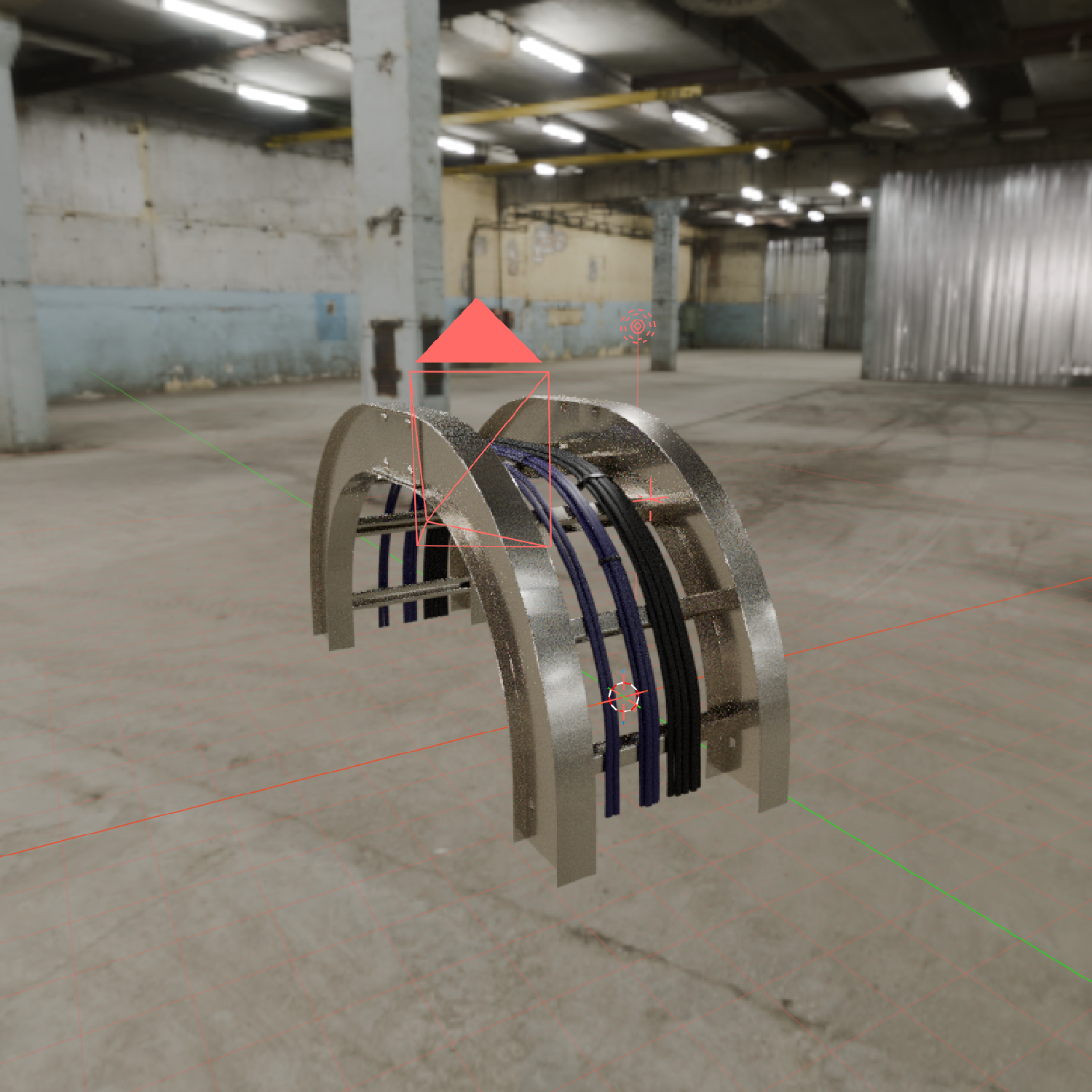
A defining element of the project for me was the creation of approximately 85 original 3D product renders, excluding subsequent rerenders and modifications.
Working primarily from supplied STL files, I developed a format for 3D renders that allowed for me to rapidly prototype, create files, and render finals. Where models were unavailable, I created select models myself.
The rendering approach began with a proof of concept I proposed to demonstrate how rendered product imagery could elevate the catalog’s presentation. Once approved, it became a central part of the visual direction.
The cover was my most ambitious application of this approach. I assembled a custom scene using the supplied product components as visual building blocks, incorporating brand-colored wiring, zip ties, realistic metal materials, and carefully composed lighting. The resulting image was created specifically for the catalog rather than sourced from existing photography.
All but one of the catalog’s photographic-style product images were produced through my rendering work, giving the catalog a consistent visual foundation.


Making Technical Information Accessible
The catalog needed to serve a practical purpose beyond introducing the product range. Customers also needed to identify products and interpret the information required to progress toward ordering.
I developed a unified presentation for ordering information, consolidating the different formats supplied by the client into a cohesive table template. I refined table layouts and consolidated conflicting visual keys where needed to make the complex formatting easier to interpret, and consistent across the many assets.
Technical accuracy remained central to the process. I worked with client-provided specifications and product information, arranging the content to balance readability, consistency, and the space available within each section.
Managing Production and Change
Over three months of intermittent production, the catalog evolved as product information and assets became available. New details sometimes required existing layouts to be revised, sections reorganized, and page compositions rebalanced.
To manage this process, I maintained a structured asset library organized by product category, section, and part. I also developed and shared with the client a color coded spreadsheet tracker to monitor completed work, missing information, and outstanding questions.
Physical paper mockups and sample pages helped me evaluate the layouts, while versioned InDesign files preserved major iterations and updates. I created reusable rendering setups to reduce repeated scene preparation and maintained consistent presentation as the asset library grew.
Working closely with the client’s marketing director, I presented updates throughout production and incorporated feedback as the publication developed.

Outcome
Stage One delivered a twenty-nine page digital catalog establishing a new presentation for ABNEX’s Niedax MonoSystems product offerings, supported by approximately 85 original product renders.
The finished publication brought product imagery, technical specifications, and ordering information together in a cohesive format designed to support the early stages of the sales process. The client received the completed work with very positive initial feedback.
Beyond the publication itself, the project established an organized asset library, a repeatable rendering workflow, and a flexible layout foundation for future catalog development.
As the product offerings continue to evolve, the catalog will remain an ongoing project with opportunities to refine its presentation and expand its capabilities.
Reflection
This project challenged me to balance visual ambition with the practical demands of technical communication. I needed to develop a working understanding of an unfamiliar product category, manage a large collection of technical assets, and maintain a cohesive visual direction as the scope evolved.
I am particularly proud of the consistency achieved across the catalog through the development and work of creating a tailored 3D visualization approach. The project reflects my ability to take ownership of a complex deliverable, develop solutions beyond the initial brief, and bring a substantial publication from concept to finalization under a firm deadline.